
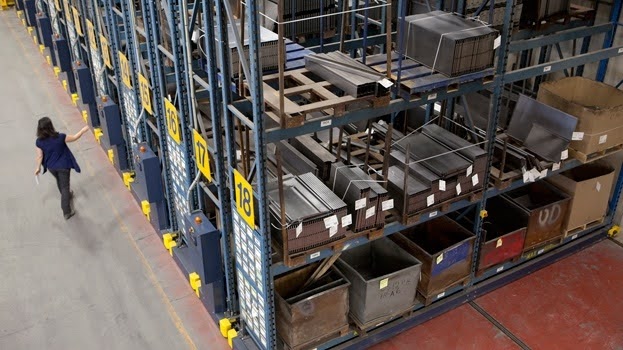
NTL Storage – www.ntlstorage.com/heavy-duty-racking-system/ might seem an unlikely subject for contemplating humanity’s relationship with finite resources, yet in Singapore’s industrial estates lies a microcosm of one of our species’ most persistent challenges: how to do more with less in a world of absolute physical constraints. The vertical racking systems that fill these warehouses represent not merely business infrastructure but a response to the fundamental problem of scarcity in the Anthropocene.
Singapore offers a peculiar laboratory for studying human adaptation to spatial limitation. With 728 square kilometres of land supporting 5.6 million people alongside one of Asia’s busiest ports and most sophisticated manufacturing sectors, the city-state has become a case study in efficiency born of necessity. Every decision about space carries environmental and economic consequences that radiate outward in ways both obvious and subtle.
The Geometry of Constraint
Stand in any industrial warehouse in Jurong or Woodlands and you witness a three-dimensional chess game played against the laws of physics and economics. Pallets stacked floor to ceiling. Aisles narrowed to the minimum width a forklift requires. Mezzanine platforms creating second storeys where previously only air existed. This is not aesthetic choice but survival strategy.
NTL Storage has spent over twenty years installing these vertical solutions, observing that “with 20+ years of experience, our company provides full-service storage and space solutions, from analysis to installation, across racking, mezzanines and more.” What this clinical description omits is the environmental calculus underlying every installation.
Consider what happens when a business outgrows its current premises. The conventional response involves leasing additional warehouse space, perhaps 3,000 or 5,000 additional square feet. This triggers a cascade of consequences. More land devoted to industrial use means less available for other purposes. More built environment means more concrete poured, more steel fabricated, more energy consumed in construction and climate control.
The Carbon Equation
The environmental cost of construction proves difficult to ignore once calculated. Concrete production accounts for approximately 8% of global carbon dioxide emissions. Steel manufacturing contributes another 7%. When a business relocates to larger premises or leases additional warehouse space, it participates in this industrial carbon cycle whether intentionally or not.
NTL Storage systems offer an alternative that sidesteps this environmental burden. A mezzanine installation within existing warehouse volume creates additional floor space without pouring new foundations or erecting new walls. The carbon footprint of steel decking and support columns, whilst not negligible, proves substantially smaller than constructing new buildings.
The mathematics become compelling when examined across Singapore’s industrial sector. If even 20% of businesses requiring additional storage capacity chose vertical expansion over horizontal expansion, the cumulative environmental benefit would be measurable in thousands of tonnes of avoided carbon emissions annually.
The Efficiency Imperative
Singapore’s geographical reality forces a kind of enforced environmentalism through simple necessity. When land costs $3,000 per square foot in some industrial zones, waste becomes financially impossible before it becomes morally objectionable.
NTL Storage offers various systems engineered for maximum density:
- Very Narrow Aisle Racking
Reduces aisle width by 50%, doubling storage capacity within identical floor space whilst maintaining full product accessibility
- Double-Deep Pallet Systems
Stores pallets four rows deep, multiplying density for bulk storage operations
- Mobile Racking
Eliminates fixed aisles entirely, with shelving units moving on tracks to create access only where needed
- Cantilever Systems
Accommodates awkward-dimension materials efficiently, preventing wasted space around irregular items
Each configuration represents a different solution to the same problem: extracting maximum utility from minimum space. This is efficiency not as abstract virtue but as practical necessity.
Resource Flows and Hidden Connections
The environmental implications extend beyond carbon emissions and land use. Efficient storage systems reduce the energy required for climate control by minimising warehouse volume. Better organisation reduces time workers spend searching for inventory, cutting fuel consumption as forklifts and other equipment operate fewer hours. Improved accessibility decreases damaged goods, reducing the waste stream of broken or destroyed products.
These connections often remain invisible in accounting systems that track direct costs but ignore externalities. Yet they accumulate. A warehouse achieving 40% better space utilisation through intelligent racking design uses 40% less energy for heating, cooling, and lighting per unit of stored inventory. Multiply this across Singapore’s industrial sector and the energy savings become substantial.
NTL Storage notes that their “dedication to service excellence and client satisfaction has made us a trusted partner helping businesses islandwide optimise their spaces.” This optimisation carries environmental dividends rarely captured in sustainability reports yet nonetheless real.
The Broader Context
Singapore’s experience with spatial constraint foreshadows challenges that other regions will increasingly face. As global population approaches 10 billion and urban areas continue expanding, the question of how to use limited space efficiently transitions from local concern to universal imperative.
The solutions pioneered in Singapore’s industrial estates, the vertical thinking and three-dimensional optimisation, offer templates applicable elsewhere. A warehouse in Rotterdam faces different constraints than one in Woodlands, yet both benefit from the same fundamental principle: building upward proves more sustainable than building outward.
The Unintended Conservation
Perhaps the most intriguing aspect of industrial storage optimisation is that environmental benefit emerges as byproduct rather than primary objective. Businesses install sophisticated racking systems to reduce costs and increase capacity. The avoided land consumption, reduced carbon emissions, and decreased energy use arrive as fortunate side effects.
This suggests a broader truth about environmental progress: sometimes the most effective sustainability measures come not from moral exhortation but from aligning environmental benefit with economic advantage. When using space efficiently saves money, businesses optimise without requiring incentives or regulations to compel action.
In Singapore’s industrial landscape, where every cubic metre carries price and consequence, the vertical solutions and comprehensive space optimisation provided by NTL Storage-www.ntlstorage.com/heavy-duty-racking-system/ demonstrate how constraint drives innovation, how necessity breeds efficiency, and how environmental benefits can emerge from pragmatic responses to immediate economic realities.