
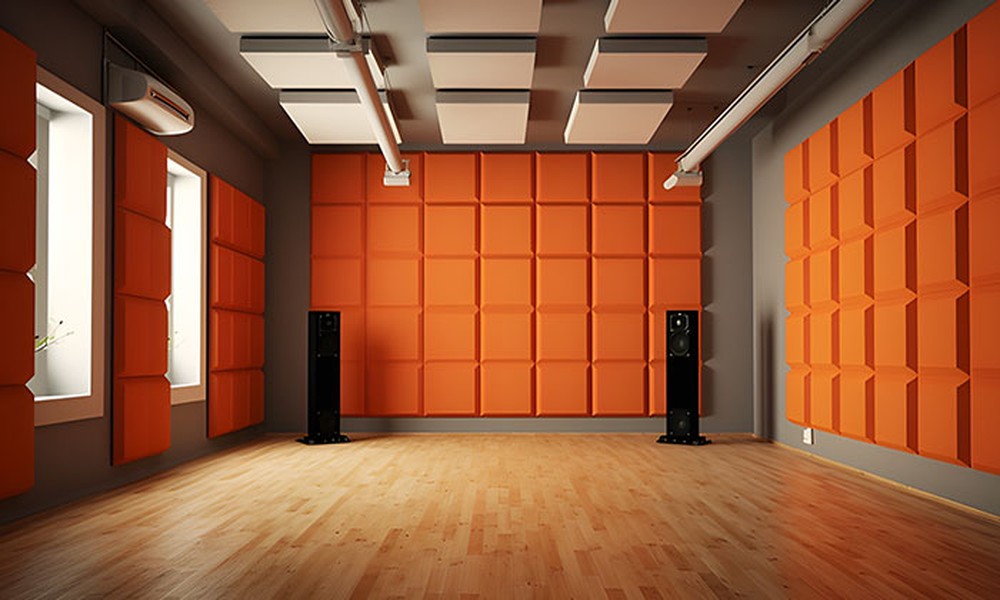
Not every space needs acoustic treatment. Some rooms just work. They feel comfortable, conversations are easy, and nothing about the sound really stands out. But then there are spaces where something feels slightly off.
You can’t always explain it right away, but after spending a bit of time there, you notice it more. Conversations feel a bit messy, noise seems to linger, and the room never quite settles. That’s usually where sound panels start to make a real difference. Not in every situation, but in those specific moments where sound stops behaving the way you expect it to.
When the room feels “full” of sound all the time.
One of the most common signs is when a space feels constantly active, even when it shouldn’t.
You might walk into a room and notice:
- There’s always a layer of background noise
- Conversations seem to overlap more than usual
- The space never feels completely calm
What’s happening here isn’t necessarily loud noise. It’s a buildup.
Sound is reflecting off surfaces, stacking on top of itself, and creating that “full” feeling.
That’s where acoustic sound panels come in. They don’t remove activity from the room, but they reduce how much sound lingers and overlaps. The space starts to feel lighter, even though people are still talking and moving around.
When echo is subtle, but tiring over time.
A lot of people expect echo to be obvious.
But in most real spaces, it’s not dramatic. It’s subtle.
You might notice:
- Voices have a slight tail after someone speaks
- Words don’t feel as crisp as they should
- Conversations require just a bit more focus
Individually, these don’t seem like big issues. But over time, they add up.
You end up putting in more effort just to follow along, especially in meetings or group discussions.
That’s when sound absorbing panels really stand out. They shorten that “tail” of sound, so voices feel clearer and more direct. It’s not something you always notice immediately, but after a while, the difference becomes obvious.
When open layouts start working against you.
Open spaces are great visually. They feel modern, flexible, and easy to move around in.
But acoustically, they can be tricky.
Without enough control, sound tends to:
- Travel further than expected
- Spread into areas where it’s not needed
- Make the whole space feel more connected than it should be
This is especially noticeable in offices or shared environments.
You might be working in one area but still hear conversations happening across the room.
Adding acoustic sound panels helps break that flow. Sound doesn’t travel as freely, and different zones start to feel more defined.
The space still feels open, but it no longer feels overwhelming.
When small noises start becoming distractions.
Every room has background noise. That’s normal.
But in some spaces, those small sounds become more noticeable than they should be.
Things like:
- Someone typing
- A chair moving
- Footsteps across the room
- A quiet conversation nearby
Instead of blending into the background, they stand out.
That’s usually a sign that the room isn’t absorbing enough sound. With sound absorbing panels, those smaller noises get softened. They don’t disappear, but they stop competing for attention.
The space feels tranquil, even though the same activities are still happening.
When people adjust their behavior without realising it.
This is one of the more interesting signs, because it’s about how people react to it.
In spaces with poor acoustics, people often:
- Speak louder than necessary
- Repeat themselves more often
- Shorten conversations because it feels effortful
It happens naturally. People adapt to the environment.
But that’s also a sign the space isn’t supporting them.
Once acoustic sound panels are introduced, those behaviors start to shift back. People speak more comfortably, conversations flow better, and communication feels easier.
It’s a small change, but it has a big impact on how the space is used.
When meetings feel more draining than they should.
Sometimes, the issue isn’t obvious during the meeting itself.
But afterward, you feel it.
Meetings in poorly treated rooms can feel:
- More tiring
- Harder to stay focused in
- Slightly frustrating, even if everything went fine
That’s often because of the extra effort required to hear and process sound.
With sound absorbing panels, that effort is reduced. You’re not working as hard just to keep up with the conversation.
The meeting feels smoother, and people leave feeling less mentally drained.
When sound travels further than expected.
In some spaces, sound doesn’t stay where it starts.
You might be across the room and still hear a conversation clearly, even if it’s not meant for you.
That lack of separation can make a space feel:
- Less private
- More distracting
- Harder to focus in
Panels help by absorbing sound along its path, so it fades more naturally instead of carrying across the entire room.
It’s not about blocking sound completely. It’s about helping it settle where it should.
When design choices unintentionally create acoustic problems.
A lot of modern interiors lean toward:
- Hard surfaces
- Minimalist layouts
- Open, clean finishes
Visually, this works really well.
But acoustically, it means there’s very little to absorb sound.
So even a well-designed space can end up feeling noisy or echoey.
That’s why sound absorbing panels are often added later. Not because the design is wrong, but because it needs balance.
They help bring that balance back without changing the overall look too much.
When you need improvement without a full redesign.
Not every space allows for big changes.
You might not be able to:
- Redo the layout
- Add partitions
- Change flooring or major materials
In these situations, panels offer a practical solution.
A few well-placed acoustic sound panels can still make a noticeable difference, especially when they’re positioned where sound reflections are strongest. It’s a focused way to improve comfort without overcomplicating things.
Final Thoughts
The biggest difference with sound absorbing panels isn’t always immediate. It builds over time. The space feels calmer. Conversations become easier. Noise stops being something you constantly notice. And that’s really the point. It’s about making it feel natural, where sound behaves the way you expect it to, and the space supports whatever you’re doing in it. Once that happens, everything else just feels a little easier.