
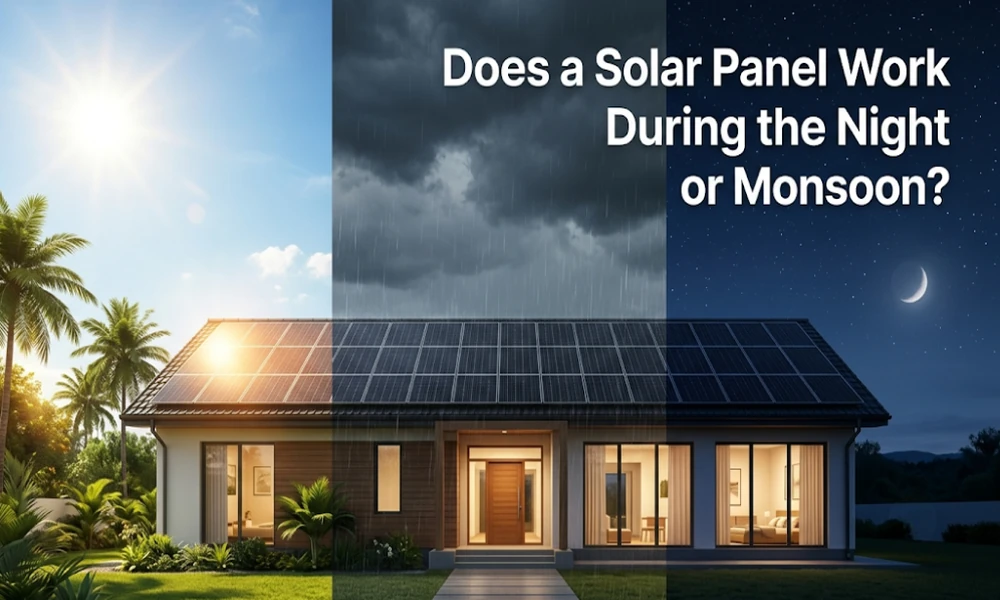
If you’ve ever looked up at your rooftop panels after sunset and wondered whether they’re still doing anything, the answer is no. Solar panels only work when there’s sunlight hitting them. Come nightfall or a heavy monsoon downpour, that conversion process just stops. It’s one of the first questions most people bring up before installing: do solar panels work at night, and the honest answer is it can’t on its own. No sunlight means no raw material for the panel to convert into electricity.
That’s where batteries come in. Whatever your panels produce beyond what your home uses during the day gets stored, then pulled from at night. Some setups go further and pair solar with a second source, wind usually, so there’s rarely a total gap in supply.
Rain is a bit different from night, though. Solar panels work in rain isn’t a total shutdown; it’s more of a slowdown. Clouds block and scatter sunlight, so less reaches the panel surface. Dust and moisture settling on panels during monsoon doesn’t help either, and now and then hail or strong wind causes actual damage. Cleaning them once in a while and getting a checkup before monsoon season starts usually keeps losses in check.
Sizing a system is where things get more specific to each home. Pull your last few electricity bills, add up your average monthly usage; that’s your baseline. Bigger homes with more running appliances need more capacity. If your area gets strong sun most of the year, you can often manage with fewer panels than someone in a place with heavier cloud cover. Most homes in India end up somewhere between 5 and 7 kW, though a site visit will tell you exactly what your roof and usage actually need.
On output, 1 kW roughly translates to 1000 watts an hour in good sunlight. That’s enough for a fridge running most of the day or a laptop for close to 20 hours. Space needed changes by panel type too. Monocrystalline is more efficient, so it takes less room, around 10 square meters per kW. Polycrystalline needs almost double that. Roof angle and how much shade you get also factor in, so numbers shift house to house.
None of this makes solar less worth it. A dip at night or during a rainy week isn’t a flaw; it’s just how the technology works. Pair it with the right battery setup and a system sized properly, and most homes barely notice the difference day to day.
Getting these details right- system size, panel type, battery backup- matters more than people expect, which is why it helps to go with someone who’s been building this technology for decades. Waaree Energies, India’s largest photovoltaic module manufacturer, has grown to over 25.8 GW in manufacturing capacity and continues helping homes across the country figure out exactly what setup works best for them.