
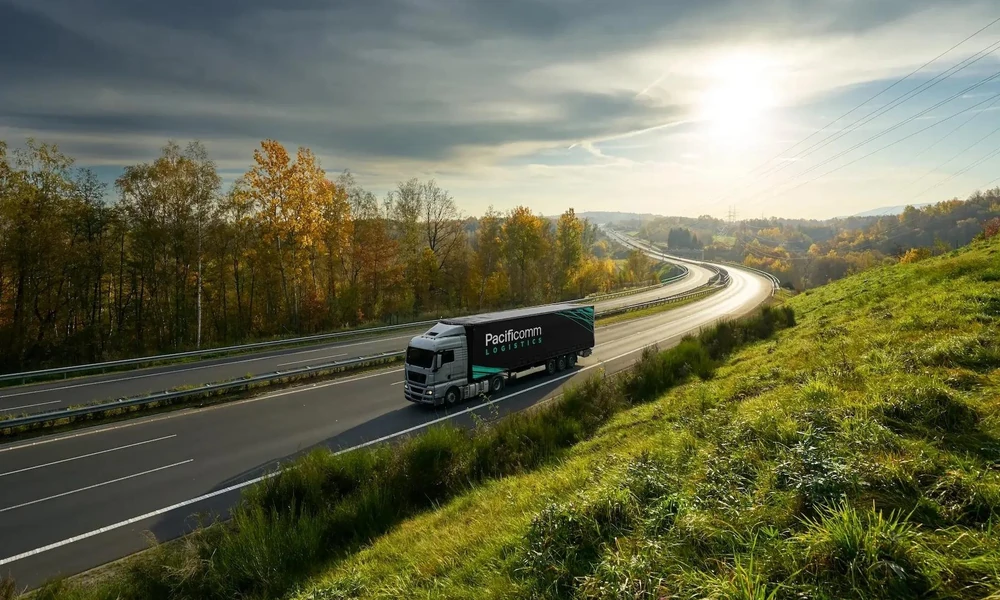
Third-party logistics in New Zealand is changing because the demands placed on supply chains are changing.
Businesses are selling through more channels, customers expect better visibility, inventory moves between domestic and international markets, and disruptions can quickly expose weaknesses in warehousing and transport networks. At the same time, New Zealand’s geography creates logistics challenges that businesses in larger continental markets do not face in quite the same way.
That is changing what businesses expect from 3pl nz providers. Warehouse space and freight coordination remain important, but the market is moving toward connected services that combine inventory, fulfilment, transport, technology, and regional reach.
Here are the developments that matter and what they mean for businesses operating in New Zealand.
New Zealand’s Geography Still Shapes the Logistics Model
There is no getting around geography.
New Zealand has a relatively small population spread across two main islands, with significant distances between major centres and many customers outside metropolitan areas. Goods entering through an Auckland gateway may ultimately need to reach Christchurch, Dunedin, regional centres, or rural addresses.
The Ministry of Transport tracks containerised freight, rail freight, coastal freight, overseas ship visits, port handling and trade through its Freight Information Gathering System. The breadth of that monitoring reflects how dependent New Zealand commerce is on several interconnected freight modes.
For businesses, the implication is that warehousing cannot be considered separately from transport.
The location of inventory influences delivery time and cost. So does the choice of carrier, linehaul schedule, inter-island connection, and final-mile service.
This is one reason Auckland remains so important to the 3PL market. Its ports, airport and road connections make it a natural location for imported inventory and national distribution. Pacificomm, for example, operates several Auckland warehouse facilities as well as a Christchurch facility, allowing inventory and distribution services to connect into both islands.
For businesses reviewing their logistics footprint, the question is increasingly not simply “Where should we store our stock?” It is “Where should inventory sit to serve the customers and channels we have?”
Imports Keep Inbound Logistics Front and Centre
New Zealand remains deeply connected to international goods flows.
Stats NZ reported goods imports of approximately $8.1 billion in June 2026, up 28 percent from June 2025. China, the European Union and Australia were among the major sources contributing to the increase.
For importers, that makes the inbound side of 3PL just as important as what happens after an ecommerce or wholesale order arrives.
There are multiple steps between a supplier shipping goods and inventory becoming available for sale in New Zealand. Containers need to move through the border, products may face customs or MPI requirements, freight must reach a warehouse, stock must be received correctly, and inventory records need to update before orders can be released.
When these processes are fragmented across several providers, delays become harder to diagnose.
The direction of travel in 3PL is therefore toward better coordination between international freight, inbound handling, warehousing and domestic distribution.
Pacificomm’s Auckland operation illustrates that model. Its published services combine inbound sea-container handling and receipting with warehousing, fulfilment and transport, alongside support for customs processes, MPI requirements and international freight.
That type of integration matters particularly in a market where so many supply chains begin offshore.
Inter-Island Distribution Is a Resilience Issue
Moving freight between the North and South Islands introduces an additional dependency that businesses need to plan around.
An operation can perform perfectly inside the warehouse and still disappoint customers if inventory is positioned badly or freight connections do not match the required service level.
That changes the role of inventory planning.
For some businesses, holding almost everything in one Auckland warehouse may still make economic sense. Others may benefit from positioning selected fast-moving inventory closer to South Island demand. The right model depends on order density, product value, storage costs, delivery promises and replenishment frequency.
The important change is to treat inventory placement as a strategic decision rather than assuming every SKU needs the same distribution model.
Businesses should also think about resilience. What happens when a normal freight lane is disrupted? Which products cannot tolerate an additional day in transit? How much buffer stock is justified? Can another carrier or distribution route be used?
A modern 3PL relationship increasingly needs to help answer those questions, not merely process the resulting orders.
Ecommerce Has Changed What Customers Expect From Logistics
The warehouse used to be largely invisible to the customer.
That is no longer true.
When somebody buys online, fulfilment performance becomes part of the brand experience. An inaccurate stock figure can result in a cancelled order. Slow picking can delay dispatch. Poor packaging can cause damage. Missing tracking information can generate customer-service enquiries.
The effect is that ecommerce has pushed warehouse operations closer to the customer experience.
It has also created a different operational challenge from traditional pallet and carton distribution. A business may need to fulfil individual consumer orders alongside wholesale shipments, retailer replenishment and promotional campaigns from the same stockholding.
That makes flexible fulfilment increasingly important.
Pacificomm’s ecommerce operation, for example, handles receiving, warehousing and individual pick-and-pack fulfilment from facilities in Auckland, Christchurch, Melbourne and Fiji, supported by real-time stock visibility.
The wider trend is more important than any one provider: 3PL is moving closer to the front end of commerce.
Businesses should therefore treat fulfilment performance as part of their customer strategy, not simply as a warehouse cost.
Rural Delivery Keeps the Last Mile Complicated
New Zealand’s last mile is not one uniform market.
A delivery model that works well across metropolitan Auckland cannot automatically provide the same economics or transit times to every regional and rural address.
That matters when businesses set nationwide delivery promises.
The temptation is to advertise one simple service level everywhere. Operationally, however, different destinations can involve different carriers, handoffs, schedules and surcharges.
A more mature logistics model recognises these differences.
Businesses should understand where their orders are actually going and segment delivery performance accordingly. Metro, regional and rural orders may need different expectations. The same applies to bulky products or goods requiring special handling.
This is another reason transport data matters. National delivery performance is less useful if it hides significant variation by region or service.
Inventory Visibility Is Becoming a Basic Requirement
One of the clearest changes in 3PL is that businesses increasingly expect to know what is happening without emailing the warehouse for an update.
That expectation is reasonable.
When inventory feeds ecommerce stores, wholesale customers and internal sales teams, delayed stock information creates problems across the business. Purchasing decisions become harder. Customer service lacks answers. Products can appear available when they are not.
The modern 3PL technology layer is therefore becoming as important as the physical warehouse.
Pacificomm’s current systems provide real-time stock-on-hand information, incoming and outgoing goods reports, consignment information, proof of delivery, stock movement and ageing reporting. The company also says orders can be traced from picking through to delivery.
Connectivity is part of the same shift. Pacificomm lists integrations across ecommerce, ERP, inventory and freight platforms and supports API, file-transfer and portal-based connections.
That reflects a broader change in what businesses should expect from outsourced logistics.
The warehouse should no longer operate as an information island.
Flexible Capacity Is Becoming More Valuable
Traditional warehousing forces businesses to make capacity decisions well before they know exactly how much space they will need.
Lease too much and capital is tied up in underused space. Lease too little and a successful product launch or seasonal peak creates an immediate problem.
Outsourced warehousing changes that equation by allowing capacity to become more variable.
That can be particularly useful in New Zealand, where individual businesses may not have the scale to justify building warehouse infrastructure around their maximum possible demand.
Pacificomm describes its own model as scalable storage that can adjust as inventory volumes fluctuate, including pallet and individual-unit storage.
The strategic benefit is not simply additional warehouse space.
It is the ability to avoid designing an entire logistics operation around a few weeks of peak demand.
That becomes more valuable as businesses deal with seasonal inventory, promotional campaigns, uncertain forecasts and new product launches.
Biosecurity and Import Compliance Remain Part of the NZ Equation
New Zealand’s border environment also makes compliance an important part of logistics planning.
Imported goods may be subject to customs, biosecurity and other product-specific requirements before they can enter normal distribution. That creates operational dependencies that domestic-only supply chains may not face.
The practical lesson is that compliance should be designed into the inbound process rather than treated as paperwork that sits alongside it.
For businesses importing relevant products, the capabilities of the warehouse receiving those goods can therefore matter.
Pacificomm’s Auckland operations include MPI Approved Transitional Facility and Operator support, as well as National Programme 1 Food Storage capability.
Not every business requires those capabilities. But for those that do, they illustrate an important feature of New Zealand 3PL: logistics and regulatory handling can be closely connected.
Australia Is the Obvious Next Market for Many NZ Businesses
For a New Zealand company looking offshore, Australia is often the natural first expansion market.
But serving Australia efficiently from New Zealand and establishing inventory inside Australia are different logistics models.
At low order volumes, cross-border fulfilment may be workable. As Australian sales increase, holding stock closer to customers can change freight costs, delivery times and the customer experience.
That creates demand for 3PL networks that can support a business on both sides of the Tasman.
Pacificomm currently lists warehouse operations in Melbourne and an office in Brisbane alongside its New Zealand network. It positions its wider offering around Trans-Tasman and Asia-Pacific logistics.
For growing NZ companies, that raises a useful strategic question:
At what point does an export market justify its own inventory position?
The answer should be driven by order density, delivery expectations, freight economics and working capital rather than expansion ambitions alone.
The Pacific Creates a Different Kind of Opportunity
Australia is not the only regional market.
New Zealand businesses also trade across Pacific Island economies, where smaller markets, longer supply routes and varying infrastructure can make logistics more complicated.
Here, network reach becomes valuable because building a separate logistics relationship in every market creates its own management burden.
Pacificomm says its network services more than 18 countries across the Pacific Rim, with a support operation in Fiji alongside its New Zealand and Australian presence.
This points to another direction in the 3PL market: providers are increasingly useful not simply as outsourced warehouses but as platforms for regional distribution.
For a New Zealand business, that can reduce the operational work required each time a new market becomes viable.
3PL Is Becoming More Integrated
Taken together, these trends point toward a broader change.
The traditional view of a 3PL was relatively straightforward: send stock to a warehouse, have orders picked, and arrange transport.
The emerging model is more connected.
Warehousing links to inventory management. Inventory links to ecommerce and ERP systems. Fulfilment links to transport. International freight links to domestic distribution. Reporting connects all of them.
Pacificomm is one example of this model in New Zealand. It combines warehousing, inventory management, pick-and-pack fulfilment, transport and freight with integrated digital systems, while its physical network extends from New Zealand into Australia and Fiji.
That does not mean every business needs every service.
It means the boundaries between those services matter less than they once did.
A stock discrepancy is simultaneously a warehouse, systems and customer-service problem. A delayed import can become an inventory-availability and fulfilment problem. A surge in ecommerce orders can become a labour, storage and transport-capacity problem.
Integrated logistics is designed around that reality.
What NZ Businesses Should Take From These Changes
The state of 3PL in New Zealand can be summed up in one idea: logistics is becoming less fragmented.
Geography still matters. Freight still matters. Warehouse execution still matters. But businesses increasingly need those components to operate as one system.
That changes the questions worth asking internally.
Do you know where your inventory should sit based on actual customer demand? Can your team see stock and order information in real time? Can your logistics model handle both wholesale and ecommerce? What happens if volumes rise sharply? How dependent are you on one freight route? And if Australia or the Pacific becomes a serious market, can your current model follow you there?
Those are broader questions than whether a warehouse has enough pallet positions.
They are questions about how the supply chain supports the business.
New Zealand creates a distinctive environment for third-party logistics.
Distance from global suppliers, an import-dependent economy, two-island distribution, regional delivery challenges and growing cross-border ambitions all influence how inventory needs to move.
At the same time, technology is raising the standard. Businesses increasingly expect live inventory information, connected systems, traceable orders and logistics partners that can coordinate more than one stage of the supply chain.
The result is a 3PL market moving toward greater integration, flexibility and regional reach.
Pacificomm provides one example of that direction, with warehousing and fulfilment across New Zealand, operations in Australia and Fiji, integrated freight services, and technology connecting inventory, orders and transport.
For New Zealand businesses, the opportunity is not simply to outsource more logistics. It is to build a supply chain that fits the realities of this market while remaining flexible enough for whatever comes next.