
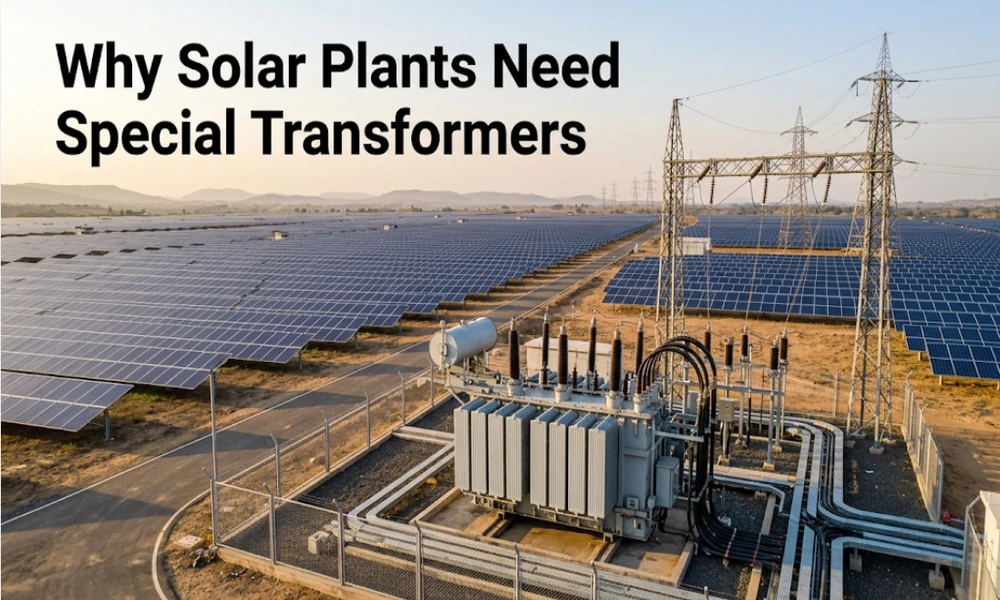
The solar panels tend to attract most of the spotlight when the subject is solar power plants. However, there is another critical component that is used for transmitting the energy generated by solar panels to the grid.
Solar power plants generate electricity only during daytime hours, and their performance depends on the light intensity and climatic conditions. The voltage of electricity generated by solar panels must be regulated before connecting to the grid, and transformers help with this task.
In addition, solar power plants operate in unique conditions different from other conventional power plants.
Role of Transformer in Solar Power Plant?
Solar panels produce DC electricity, which is converted into AC with the help of the inverter, and when needed, the transformer changes the voltage according to the requirements of the power plant’s electrical design.
In bigger solar power plants, a step-up transformer raises the voltage before the transmission of electricity because it helps lower current and loss of electricity in the process of its transfer.
The specifications of the transformer, including capacity, voltage, insulation, cooling system, and protection, should be suitable for the specific power plant.
How Do On-Grid Solar Inverters Work with Transformers?
The solar on-grid inverter transforms the electrical energy produced by the solar panel in such a way that it can be used by the equipment or fed into the power grid. The transformer changes the voltage according to the system requirements.
The choice of an inverter depends on the capacity of the system and the electrical requirements of the system. The single-phase on-grid inverter is usually chosen for residential solar installations, whereas the three-phase on-grid inverter is recommended for larger houses, commercial and industrial use.
A larger solar power plant may use several inverters operating along with one or several transformers. The capacity and the voltage rating of the inverters and transformers should be compatible with each other.
Why Can’t Every Solar Plant Use a Standard Transformer?
1. Output of solar power varies
The output from a solar farm is influenced by the amount of sunlight present. Cloud cover, changing weather patterns, and daylight times can lead to an increase or decrease in electricity generation capacity. Transformers should be designed for operating parameters without loss of reliability.
2. Inverters impact electrical characteristics
Solar inverters utilise power electronics for conversion of the electricity. Some designs can result in harmonic currents and switching effects, which will create extra requirements for transformers’ components. Such transformers are designed with those parameters in mind.
3. Climate influences transformers
Solar installations tend to be located outside and therefore exposed to dirt, heat, moisture, and changing weather patterns. A suitable transformer needs to be provided with sufficient insulation and cooling to ensure reliability of its performance in the long term.
4. Losses influence transformer selection
Transformers have no-load losses when energized and load losses during the current flow within windings. Even a slight difference can be significant over time. Considering the efficiency of transformers together with their price can help to make a better choice for projects.
What Should You Check When Selecting a Solar Transformer?
It all boils down to the capacity of the plant, inverter configuration, method of connecting to the grid, and the environment where it will be installed.
First, ensure that it meets the rated capacity and voltage requirements. In addition, impedance, winding configuration, cooling, insulation, and protection considerations have to be taken into consideration. All these specifications have to match the inverter output and voltage level required at the point of connection.
Operating temperature is especially critical in hot environments. Maintenance access, monitoring, standards compliance, and technical support should be considered before purchase.
Not all projects are the same. A household installation with a single-phase inverter and a utility-scale solar park with several three-phase inverters may need entirely different transformers.
How Waaree Supports Solar Power Infrastructure
Transformers help connect solar generation equipment with electrical networks. Waaree Transpower offers transformer solutions for renewable energy applications, including solar and inverter duty transformers.
Its portfolio also includes oil-filled transformers, dry-type transformers, and package substations for different electrical requirements. The appropriate solution depends on the project’s voltage level, capacity, installation conditions, and operating needs.
You can explore Waaree’s transformer solutions to learn more about its products and their applications.
Conclusion
A solar plant needs more than efficient panels and reliable inverters to deliver electricity consistently. Its transformer must also suit the electrical design, operating conditions, and grid connection requirements. Choosing the right equipment can help control energy losses and reduce avoidable maintenance issues. With its range of transformer solutions for renewable energy and industrial applications, Waaree Transpower offers options for projects with different capacity and voltage requirements. The key is to select equipment that meets the actual needs of the installation.