
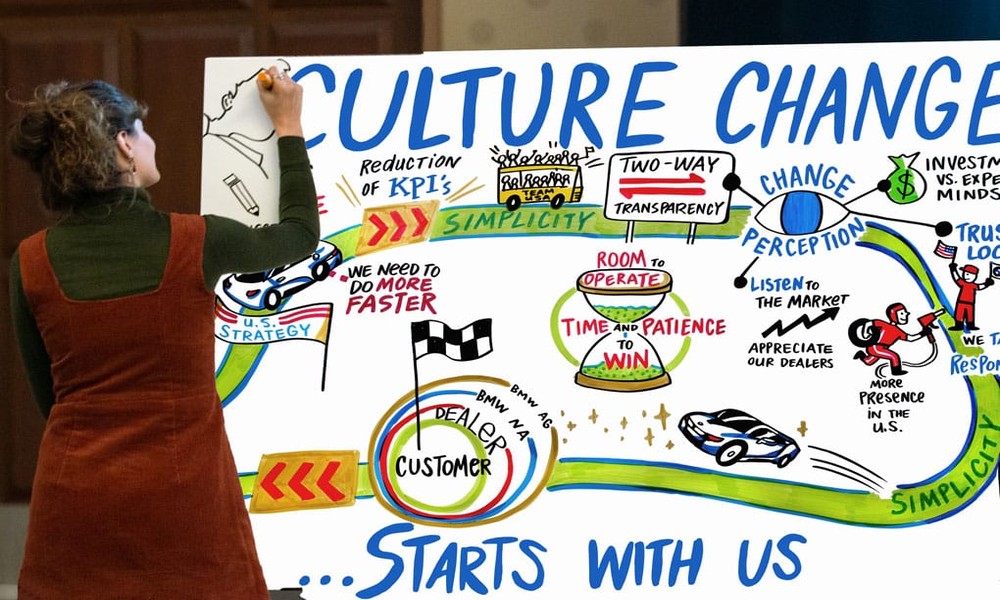
Graphic facilitation is more than just drawing on a board. It’s a powerful way to guide discussions, organize ideas, and help teams work together more effectively. While terms like “graphic recording” and “graphic facilitation” are sometimes used interchangeably, they are not exactly the same. Graphic recording focuses on visually capturing ideas as they happen. Graphic facilitation, on the other hand, goes a step further—it uses visual tools to actively lead discussions, encourage creative thinking, and keep meetings productive. A skilled graphic facilitator combines real-time visual capture with exercises and strategies that help groups collaborate, plan, and solve problems.
With nearly 15 years of experience, teams like ImageThink have mastered the art of graphic facilitation. Below, we’ll explore the key skills and elements that make this approach so effective.
The Core Skills of a Graphic Facilitator
1. Real-Time Strategy and Adaptability
A graphic facilitator doesn’t just record ideas—they shape the conversation. By listening carefully and reflecting key points visually, they help guide the discussion forward. They notice missing pieces, ask questions that spark deeper thinking, and can adjust the meeting flow on the spot if needed. This ability to pivot in real-time ensures that the meeting stays productive and that important topics are fully explored.
2. Understanding Group Dynamics
Every group is different, and experienced graphic facilitators know how to read a room. The mix of participants, the size of the group, and even the sensitivity of the topic can all change how people communicate. A graphic facilitator uses this understanding to ask the right questions, mediate when discussions get tense, and keep the group focused. This skill is crucial for creating a safe and productive environment where everyone feels heard.
3. Planning the Agenda
Good graphic facilitation starts before the meeting even begins. Facilitators work with clients to design an agenda that matches the group’s goals and keeps participants engaged. They carefully plan how topics flow from one to the next and use interactive exercises to make discussions more meaningful. A well-structured agenda helps ensure that time is used effectively and that every voice is included.
Tools and Techniques That Make Graphic Facilitation Work
4. Using Visual Templates and Exercises
Graphic facilitators have a toolkit of visual templates and exercises to help groups think differently and solve problems. These might include priority maps, Stop/Start/Continue charts, or brainstorming frameworks. More than just knowing how to use these tools, a skilled facilitator knows when to introduce them and how to adapt them to fit the team’s goals.
5. Staying Calm Under Pressure
Meetings rarely go exactly as planned. Materials might be missing, speakers may cancel, or technology can fail. A strong graphic facilitator stays calm and adapts quickly. They can improvise solutions, keep participants engaged, and maintain focus on the meeting goals. This poise under pressure ensures that the session continues smoothly no matter what challenges arise.
6. Working as Part of a Team
Graphic facilitation often supports larger meeting initiatives. Facilitators collaborate with other team members, clarify their role, and actively contribute to the meeting’s success. They stay present, ask questions, and remain flexible to changing dynamics. Their goal is not just to capture ideas but to help the whole team work better together.
7. Turning Meetings into Action
A successful meeting is more than just a discussion—it leads to results. Graphic facilitators help identify next steps, assign responsibilities, and set deadlines. They may also provide summaries or reflections after the meeting to ensure ideas are carried forward. This follow-up helps organizations turn insights into action and ensures that meetings have a lasting impact.
Conclusion
Graphic facilitation is a unique skill that combines visual thinking, strategy, and collaboration. By guiding conversations, capturing ideas, and creating a clear path forward, a graphic facilitator ensures meetings are productive, creative, and meaningful. With the right approach, teams can leave the room not just with notes, but with actionable solutions and a shared understanding of what comes next.