
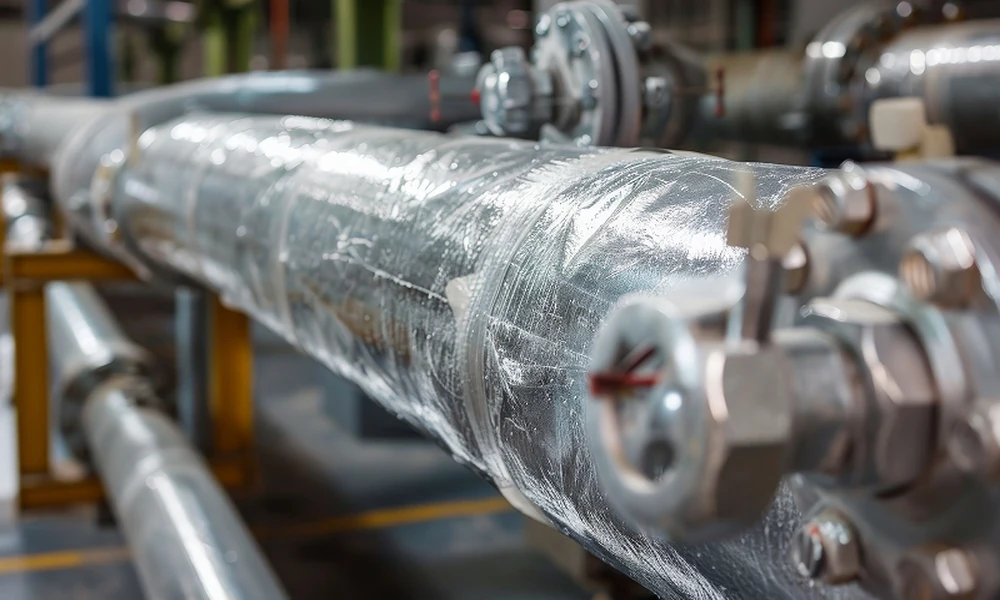
- Flange blankets prevent significant heat loss from one of the most common “uninsulated” points in a piping system.
- Custom-made blankets allow for rapid removal, facilitating easy inspection and maintenance of flange bolts.
- These blankets can be designed with integrated leak detection features to prevent fluid buildup and corrosion.
- Installing removable insulation blankets on flanges improves the overall thermal balance of the entire facility.
Introduction
Flanges are the literal “joints” of an industrial piping system, but they are also frequently the most ignored when it comes to insulation. Because flanges require periodic tightening and inspection, many plant managers choose to leave them bare to avoid the mess of traditional lagging. However, leaving a flange uninsulated is like wearing a thick winter coat but leaving it wide open at the chest. The amount of heat that escapes from an uninsulated flange can be surprisingly high, impacting both your energy efficiency and the safety of your workspace. An insulation blanket for flange connections provides the perfect solution: high-performance thermal protection that is entirely removable and reusable. In a city like Singapore, where operational costs are high, every percentage of efficiency counts. Let’s explore why these specialised blankets are a must-have for any modern piping network and how they can improve your plant’s reliability.
Closing the Gap in Thermal Protection
In most facilities, the straight runs of pipe are well-insulated, but the flanges stand out, radiating heat into the air. This creates a “thermal bridge” where heat bypasses your insulation and escapes. By installing an insulation blanket for flange connections, you effectively close these gaps. These blankets are designed to overlap the existing pipe insulation, creating a continuous barrier that keeps the heat trapped inside the process line where it can do its job. It’s a simple fix for a very common problem.
This isn’t just about saving a few cents; it’s about maintaining the integrity of your process. In some systems, even a small drop in temperature due to uninsulated flanges can cause fluids to thicken or steam to condense prematurely. This can lead to increased pumping costs or “water hammer” issues in steam lines. By ensuring a uniform temperature across the entire length of your piping, you improve the reliability of your system. Removable insulation blankets are the most practical way to achieve this without making maintenance a nightmare for your engineering team.
Facilitating Easier Maintenance and Inspection
The main reason flanges are often left bare is the need for constant access. Flanges can leak, and bolts need to be checked for proper torque. If you use permanent lagging, you have to destroy it to get to the flange. With a removable insulation blanket, the process is transformed. A technician can simply unstrap the blanket, perform the necessary checks, and strap it back on in under a minute. It requires no special tools and produces zero mess or waste.
This ease of access actually encourages better maintenance. When a task is difficult or messy, it is more likely to be postponed. By making the inspection process clean and quick, you ensure that your flanges are checked more frequently, reducing the risk of catastrophic failures. Honestly, the time saved by your maintenance crew over the course of a year can often pay for the cost of the blankets themselves. It is a rare example of a solution that makes life easier for the staff while also saving the company money in the long run.
Early Leak Detection and Corrosion Prevention
A common concern with insulating flanges is that a leak might be hidden beneath the insulation, leading to Corrosion Under Insulation (CUI). However, modern removable insulation blankets for flange joints can be designed with “drainage ports” or “weep holes” at the bottom. If a gasket fails and fluid starts to escape, it will immediately drip from these holes, alerting the operators to the problem. This is a massive safety advantage over traditional lagging, which can soak up leaking fluid like a sponge.
Furthermore, by keeping the flange at a stable, elevated temperature, these blankets can actually reduce the risk of condensation-driven corrosion on the outside of the pipe. They protect the metal from the humid Singapore air, which is notorious for causing rapid rust. In a well-designed system, these blankets act as a protective skin that doesn’t just hold in heat, but also guards against environmental degradation. It’s a multi-layered approach to equipment longevity that every facility should consider for its critical lines.
Improving Safety and Ambient Temperatures
High-pressure steam or hot oil lines can make a flange hot enough to cause a third-degree burn instantly. In tight mechanical rooms where workers must squeeze past equipment, these exposed hot spots are a major hazard. An insulation blanket for flange connections acts as a vital safety shield, keeping the outer surface temperature at a safe level. This proactive safety measure is essential for maintaining a high standard of workplace health and safety (WHS) and protecting your most valuable asset-your people.
Additionally, by containing the radiant heat, these blankets help keep the ambient temperature of the facility much lower. This is particularly important in Singapore’s tropical climate, where indoor work environments can quickly become stifling. A cooler plant floor means more comfortable workers and a reduced load on your building’s cooling systems. It’s a win-win situation: you save energy on your heating process while also saving energy on your workspace cooling.
Conclusion
Insulating your flanges is one of the most effective ways to complete your facility’s thermal envelope. By using removable blankets, you overcome the traditional barriers of maintenance access and leak detection. These blankets provide a fast return on investment through energy savings and improved safety. If you are looking to modernise your piping system and reduce operational costs, addressing your flanges is the logical next step. Efficiency starts at the joints-make sure yours are protected. For high-quality, custom-fitted solutions, contact Ancloz Engineering today.