
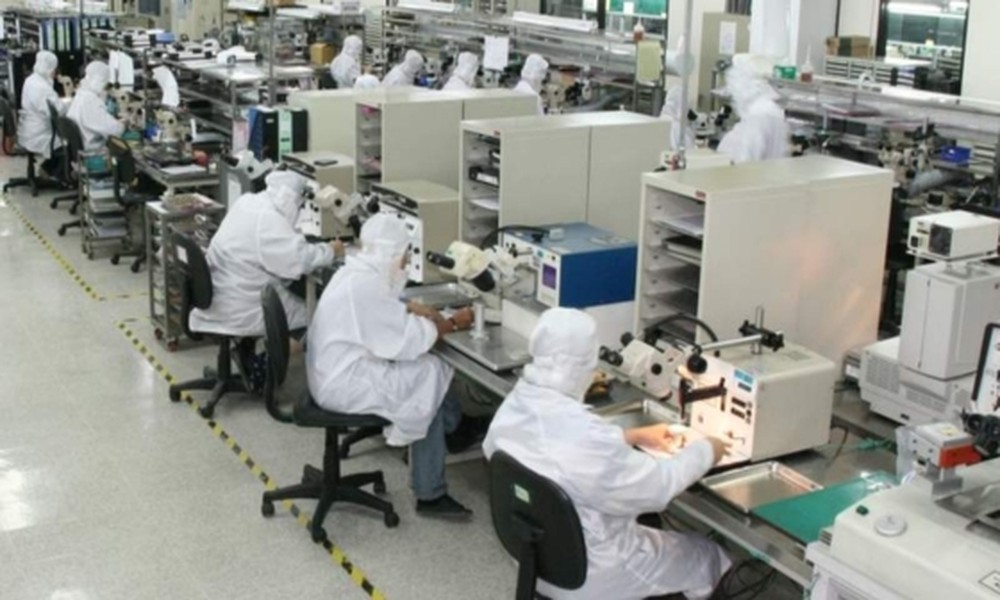
Contract manufacturing of medical devices allows OEMs to bring products to market faster by leveraging specialised production capabilities without building those capabilities in-house. The decision to outsource manufacturing reshapes how companies allocate capital, manage regulatory compliance, and scale production to meet fluctuating clinical demand. Singapore has emerged as a preferred location for this model, offering a combination of engineering talent, regulatory infrastructure, and logistics connectivity that few regions match.
Why OEMs Choose Contract Manufacturing
Building an in-house manufacturing operation for medical devices requires capital investment that typically exceeds USD 15 million for a facility capable of producing Class II devices. Lead times from facility design to first production run stretch beyond 18 months. Many medical device companies, particularly those in the growth stage, choose to redirect that capital toward clinical trials, regulatory submissions, and commercial launch activities that generate revenue sooner.
Cost Structure Advantages
Contract manufacturers spread fixed costs across multiple customer programmes. A CNC machining centre costing USD 800,000 serves several product lines simultaneously rather than sitting idle between production runs for a single customer. This shared utilisation model reduces the per-unit manufacturing cost by 25% to 40% compared to dedicated in-house operations. OEMs convert fixed manufacturing overhead into variable costs that scale with order volume, improving cash flow predictability during the early commercialisation phase.
Access to Specialised Equipment
Medical device components often require machining, surface treatment, and assembly technologies that span multiple disciplines. A cardiac catheter housing might need five-axis CNC milling, electropolishing, laser welding, and clean room assembly. Few OEMs maintain all these capabilities under one roof. A contract manufacturer of medical devices like AMT consolidates these processes within a single facility, eliminating the coordination overhead and quality risks associated with managing multiple subcontractors.
AMT’s Contract Manufacturing Services
AMT operates from a 50,000-square-foot facility in Singapore, serving medical device OEMs across North America, Europe, and Asia-Pacific. The company holds ISO 13485:2016 certification and maintains FDA establishment registration. Production capabilities span precision machining, metal injection moulding, surface finishing, and clean room assembly for devices ranging from Class I accessories to Class III implantable components.
Programme Management Approach
Each customer programme receives a dedicated programme manager who coordinates engineering, production, quality, and logistics activities. This single point of contact reduces communication overhead and accelerates decision-making when design changes or production issues arise during the product lifecycle.
- Programme managers hold weekly status calls with customer engineering teams
- Production schedules updated daily with real-time capacity allocation visibility
- Engineering change orders processed within 72 hours from submission to impact assessment
- Quarterly business reviews covering quality metrics, delivery performance, and cost reduction initiatives
Design for Manufacturability Support
AMT’s engineering team reviews customer designs before production begins, identifying opportunities to reduce machining time, eliminate unnecessary tolerances, and simplify assembly sequences. This design for manufacturability (DFM) process typically reduces production costs by 10% to 20% while maintaining or improving functional performance. Engineers use simulation software to predict material behaviour during machining, identifying potential issues before cutting the first part. The DFM review also flags features that may create inspection challenges, allowing modifications early in the development cycle.
“Singapore’s medical technology manufacturing sector employs over 16,000 workers and contributes significantly to the nation’s advanced manufacturing output,” said Mr. Gabriel Lim, Permanent Secretary of the Ministry of Trade and Industry. “Contract manufacturing remains a growth driver, with local companies winning new programmes from global OEMs each year.”
Regulatory Compliance Framework
Medical device contract manufacturing requires compliance with regulatory frameworks that vary by destination market. The United States demands adherence to FDA 21 CFR Part 820 quality system regulations. The European Union requires compliance with the Medical Device Regulation (MDR 2017/745). Japan imposes requirements under the Pharmaceutical and Medical Device Act (PMDA).
AMT maintains quality management systems that satisfy all three frameworks simultaneously. The company undergoes annual surveillance audits from its notified body and hosts customer audits throughout the year. Document control systems maintain current versions of procedures, work instructions, and forms across all departments.
- Corrective and preventive action (CAPA) system with automated escalation workflows
- Supplier qualification programme covering raw material vendors and service providers
- Validated cleaning and sterilisation processes with documented installation, operational, and performance qualifications
- Complaint handling procedures aligned with medical device reporting requirements in target markets
Supply Chain Management
Reliable contract manufacturing depends on a stable supply of raw materials and components. AMT maintains safety stock agreements with primary suppliers for critical materials including medical-grade stainless steel, titanium alloys, and biocompatible polymers. Dual sourcing strategies for high-volume materials protect against single-supplier disruptions that could halt production lines.
The company manages inventory using a material requirements planning system that generates purchase orders based on confirmed production schedules and safety stock levels. Incoming materials undergo chemical composition verification, dimensional inspection, and certificate of conformance review before release to production.
Scaling Production Volumes
Medical device demand follows patterns driven by clinical adoption curves, hospital purchasing cycles, and regulatory approvals in new markets. A medical device outsourced manufacturing partner must accommodate volume swings without compromising lead times or quality. AMT’s cellular manufacturing layout allows rapid reallocation of capacity between product families, supporting volume increases of up to 30% within a four-week ramp period through contract manufacturing of medical devices that adapts to evolving market conditions.