
A large family home can make ordinary plumbing work much harder. More bathrooms, bigger kitchens, larger laundries, outdoor entertaining areas and busy morning routines all increase demand on systems that may have been installed years earlier for a different household.
Castle Hill has many homes where space is a major advantage. The plumbing challenge is that bigger homes often hide bigger usage. A system may appear fine when one person is home, then struggle every morning when showers, toilets, taps, appliances and irrigation all compete for capacity.
This is why plumbing issues in larger homes often show up as repeated strain rather than one obvious failure.
Hot water is usually the first pressure point
Multiple bathrooms change hot water demand quickly. Two showers running at once, followed by kitchen use and laundry, can empty a storage tank or push a continuous-flow unit close to its limits.
Running out of hot water does not always mean the system is broken. It may be undersized for the way the household now lives. On the other hand, if performance has declined suddenly, a thermostat, element, valve or other component may be failing.
A Plumber Castle Hill family’s call should ask about peak use, not just the age of the unit. The busiest half hour of the day often tells the real story.
Drains receive more than water
Busy homes send more hair, soap, food scraps, grease, paper, lint and cleaning residue through the drains. The more fixtures connected to a shared line, the more important pipe capacity and condition become.
Kitchen drains can narrow from fats and oils. Bathroom drains collect hair and soap. Toilets can struggle when wipes or excess paper enter the system. Laundries send lint and detergent residue through the waste line.
One slow drain may be a local issue. Several slow drains after busy household use can suggest the downstream line is losing capacity.
Fixtures wear faster under heavy use
Taps, toilet inlet valves, flush mechanisms, shower mixers, flexi hoses and isolation valves all have working parts. In a home with multiple occupants, those parts are used many times a day.
Small symptoms deserve attention: a toilet that refills by itself, a tap that needs extra force to close, a shower mixer that fluctuates or a hose that shows rust. None of these looks dramatic, but each can become a leak or water-wasting fault.
Routine maintenance in a larger home should include the small components, not just the major systems.
Water pressure can be too high or too low
Large homes sometimes experience weak flow when several outlets are used together. That may point to pipe sizing, restrictions, pressure control, fixture design or supply limitations.
High pressure is another concern. It can feel convenient at the shower but can shorten the life of valves, hoses and appliances. In a home with many fixtures, pressure stress can create multiple small failures over time.
Testing pressure and flow under realistic demand helps separate a supply issue from a house-side restriction.
Outdoor plumbing adds another layer
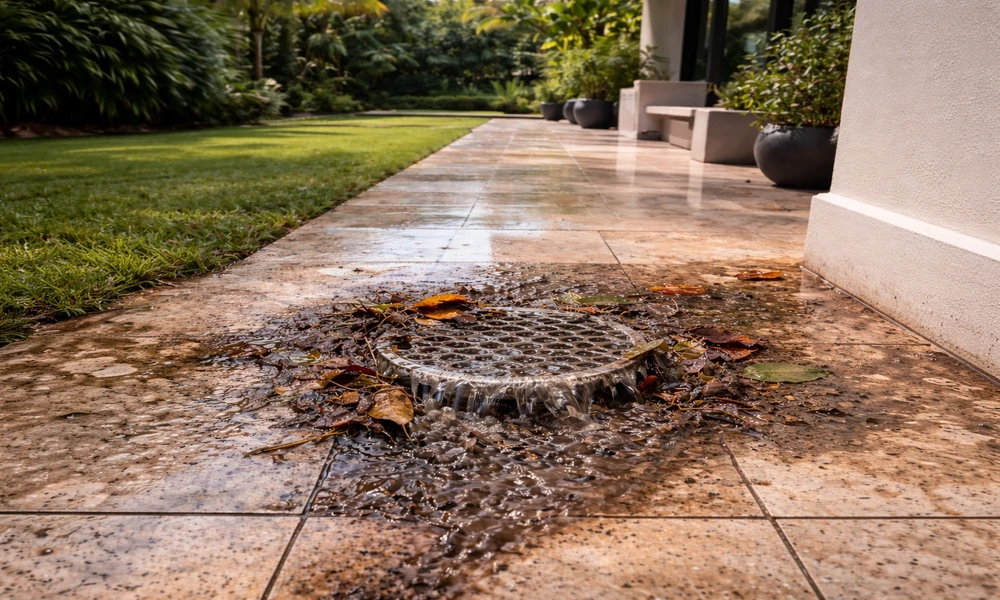
Pools, garden taps, irrigation, outdoor kitchens and stormwater systems add more plumbing load. Large roof areas and paved driveways create more runoff during heavy rain. If outdoor drains are blocked or undersized, water can pool near garages, paths or foundations.
Irrigation leaks can also go unnoticed because the water is outside. A wet patch, unusually green lawn or meter movement when the home is not using water can indicate hidden loss.
For plumbers Sydney homeowners call to larger properties, outside plumbing is part of the whole system, not an afterthought.
Renovations can outgrow the original design
Many large homes have been extended. A second ensuite, new laundry, outdoor kitchen or larger hot water unit may have been added to plumbing that was not designed for that demand.
Problems may not appear immediately. They show up during peak use, wet weather or after several fixtures are used together. Slow drainage, water hammer, pressure changes and temperature drops can all be clues.
Before adding more fixtures, a plumbing assessment can check whether existing pipes, drains and hot water capacity are suitable.
A bigger home benefits from planned maintenance
Waiting for a failure in a large household is disruptive. One blocked main drain can affect several bathrooms. One failed hot water unit can upset the whole morning routine. One burst hose upstairs can damage multiple rooms.
The practical approach is to watch patterns. Are the same drains slowing? Does hot water fail only at peak times? Are toilets refilling after use? Does pressure change when appliances run?
A best plumber Sydney claim is less useful than a plumber who asks these questions and understands how the home is used. Larger Castle Hill homes do not need fear-based advice. They need sensible checks that match higher daily demand and catch small weaknesses before the household load turns them into bigger repairs.
The busiest hour is the best test
If you want to understand whether a large home is coping, pay attention during peak use rather than during a quiet afternoon. Morning showers, toilet use, kettle filling, dishwasher cycles and laundry can reveal pressure changes, slow drainage and hot water limits that never appear when one tap is running alone.
Those observations help a plumber give practical advice. A system designed around real household behaviour is more useful than one judged only by the number of bathrooms on paper.
